
undefined 4, 2024
How close is AI to human-level intelligence?
OpenAI’s latest AI model, o1, has reignited debates about artificial general intelligence (AGI), which would enable machines to reason, plan, and generalize like humans. Despite advances in large language models (LLMs), experts argue LLMs alone cannot achieve AGI due to limitations in adaptability, reasoning, and planning. AGI requires breakthroughs in world-model building and feedback systems to mimic human intelligence, which current models lack.

Death Clock: New app says it knows when people will die
"Death Clock" is an AI-powered app that predicts a user’s death date based on questions about gender and lifestyle, using data from over 1,000 longevity studies. It also offers suggestions to extend lifespan by improving habits like diet, sleep, and exercise. The app promotes a companion app, "Most Days," which provides personalized habit-change tools, with additional paid features.

In the new space race, hackers are hitching a ride into orbit
Space systems face rising cybersecurity threats, including AI vulnerabilities like data poisoning and adversarial attacks, risking mission sabotage and national security. The U.S.-China rivalry and incidents like Starlink and JAXA hacks highlight the stakes. Firms like Microsoft and Amazon aid in defense with advanced tools, but over-reliance on automation poses risks, emphasizing the need for robust safeguards, redundancy, and skilled human oversight.

Meta says it’s mistakenly moderating too much
Meta acknowledges excessive content moderation mistakes, with harmless posts often removed unfairly. Nick Clegg admits error rates are too high and regrets over-enforcement during the pandemic, influenced by government pressure. Meta plans to refine its policies, described as "living documents." Recent failures, like takedown errors on Threads, highlight challenges as Meta balances free expression with moderation efforts.
12 strange reasons humans haven't found alien life yet
Physicist Enrico Fermi's famous question, "Where is everybody?" reflects the Fermi Paradox—why, with so many planets capable of supporting life, haven't we encountered aliens? Possible explanations include a universe that isn't optimal for life, alien civilizations being too advanced or isolated, or self-destruction. Some theories suggest life could exist in underground oceans, on super-Earths, or as machines rather than biological beings.
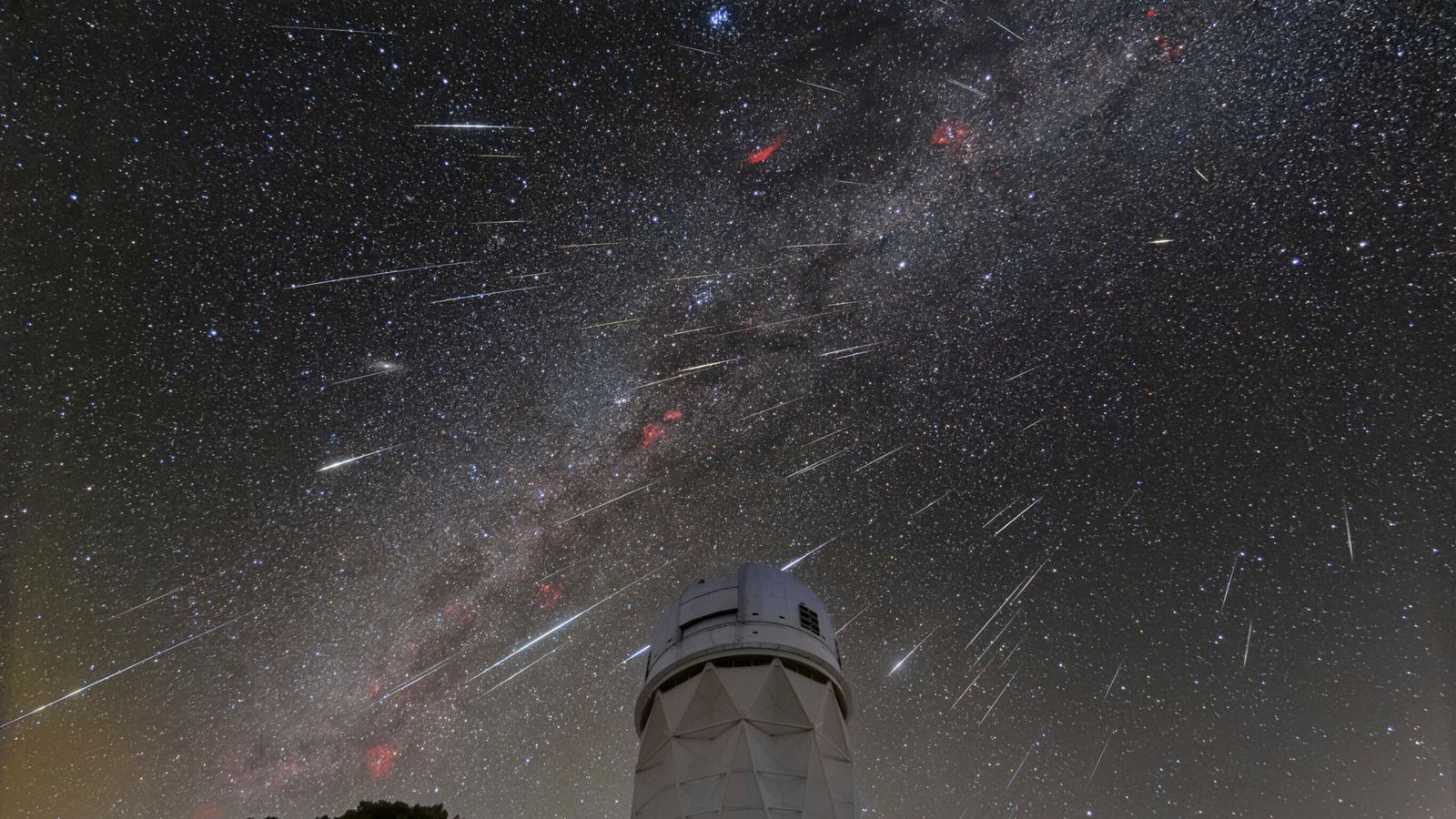
How to see one of the best natural light shows of the year
The Geminid meteor shower runs from December 4 to 20, peaking on the 14-15th with up to 150 meteors per hour. While clear skies are key, a full moon may make viewing challenging. Meteors often appear as colorful streaks, caused by elements like sodium and calcium. Welsh astrophotographer Dafydd Wyn Morgan suggests finding a dark spot between 9pm-midnight, facing northeast, and recommends bringing a red torch for visibility. The Geminids, originating from asteroid 3200 Phaethon, were first seen in 1862.

Apple admits Siri won’t be cleaning your floors anytime soon
Apple's promised robot vacuum support for HomeKit, initially expected with iOS 18, has been delayed until early 2025. A footnote on Apple's website reveals this update will only be available in U.S. English at launch. The lack of robot vacuum control has frustrated users, as third-party solutions are needed for basic automation. Additionally, Siri's Apple Intelligence feature is also delayed until January 2025.

Abandoned Cold War 'city under the ice' rediscovered by NASA
NASA scientists have rediscovered Camp Century, a Cold War-era U.S. base buried under 100ft of ice in Greenland. Built in 1959 as a secret missile launch site, it was abandoned in 1966. While the base was previously known, new mapping technology has revealed its structures like never before. The site, now a point of controversy due to pollution left behind, may be part of an ongoing debate over Greenland's future and its clean-up responsibilities.

You can take a selfie with the Earth using this YouTuber’s satellite
Mark Rober, former NASA engineer, is launching a satellite with Google and T-Mobile that will take selfies of people with Earth in the background. To participate, you must share your location, and the satellite will snap your photo as it orbits overhead in 2025. To get a free code for this, you need a CrunchLabs subscription, or be a T-Mobile or Google Pixel customer. The satellite uses two cameras and a flywheel to adjust its position for selfies and energy collection.

The hunt for heat: Drilling the deepest holes on Earth
Geothermal energy is a promising, inexhaustible source, but harnessing it globally requires deep drilling. Iceland utilizes nearby geothermal resources, generating heat and electricity from shallow wells, while other regions need to drill deeper to reach high temperatures. New technologies like millimetre-wave and plasma drilling aim to access deeper, hotter geothermal energy, with companies like Quaise Energy and GA Drilling leading the way. These innovations could unlock large-scale geothermal power worldwide.