
undefined 1, 2024
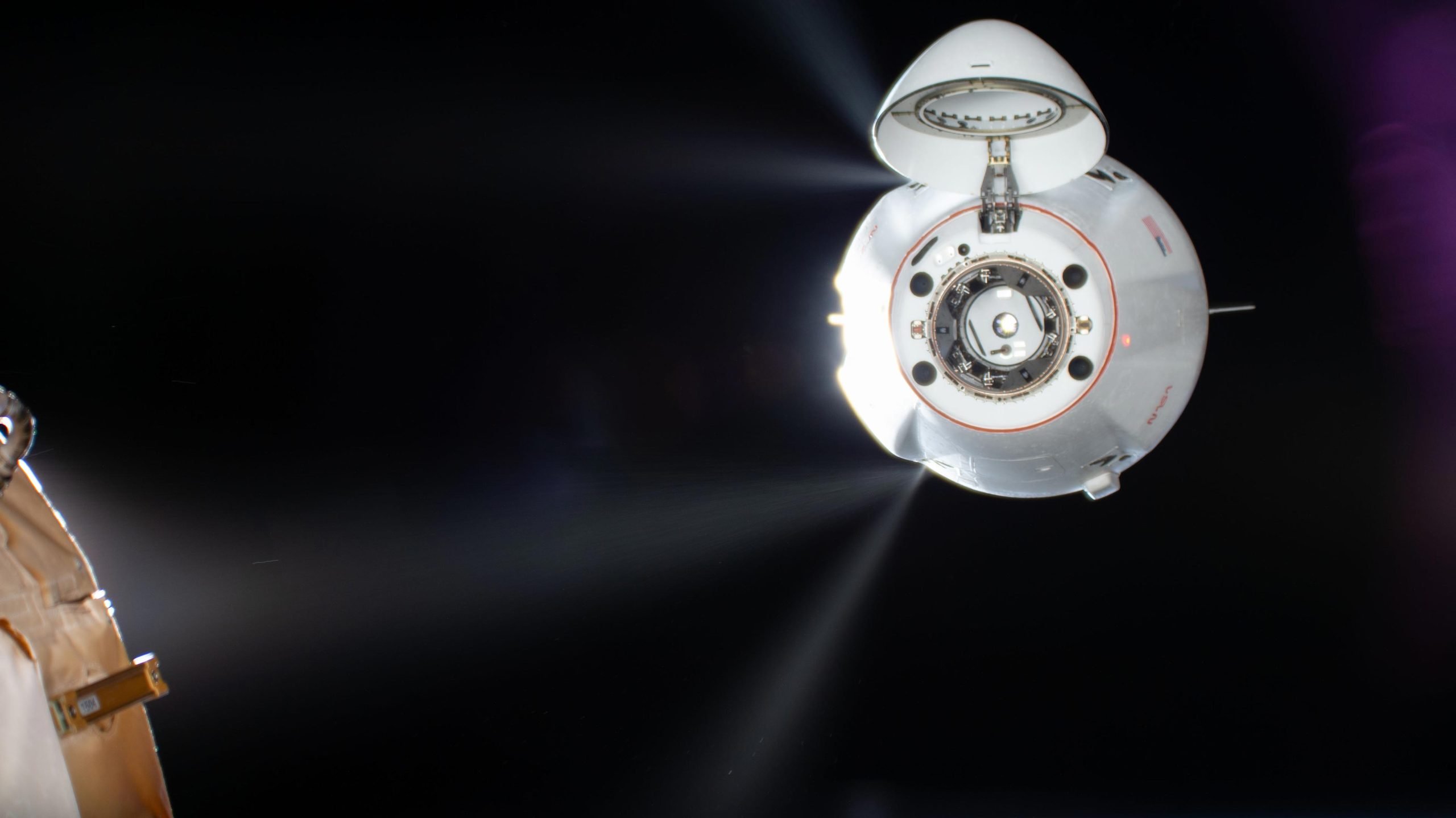
SpaceX docks at ISS to collect stranded astronauts
A SpaceX Dragon capsule successfully docked with the ISS to bring back astronauts Butch Wilmore and Suni Williams, who were stranded after a fault was discovered in Boeing's Starliner during their June mission. The Dragon capsule, which was carrying NASA astronaut Nick Hague and Russian cosmonaut Alexander Gorbunov, launched from Florida after a delay due to Hurricane Helene. Wilmore and Williams are expected to return to Earth in February. Boeing's Starliner has faced multiple issues, delaying its development and mission schedules.

Meta unveils new smart glasses and headsets in pursuit of the Metaverse
Mark Zuckerberg's Meta introduced new products, including an updated Quest 3S VR headset, AI-powered smart glasses, and improvements to Meta AI, with celebrity voices like John Cena and Awkwafina. Despite spending billions on Reality Labs and AI, Zuckerberg's vision for a metaverse remains far off. Meta also revealed live translation features and experimental smart glasses, Project Orion, which could eventually replace smartphones. While user adoption is slow, Zuckerberg remains optimistic about the future of these technologies.
How Hurricane Helene became a monster storm
Hurricane Helene, a massive storm, hit the southeastern U.S., killing over 100 and leaving many missing. Power outages affect millions, with areas like Asheville, NC, struggling for resources. The storm's unusual size, intensity, and speed, fueled by warm waters and climate conditions, led to devastating wind, storm surge, and flooding. Helene's rapid inland movement spread the damage, impacting regions less prepared for hurricanes. Climate change likely contributed, making future storms more dangerous.

Earth might escape annihilation when our sun dies
In billions of years, when the Sun dies, it will expand and possibly engulf Earth, though recent discoveries suggest Earth could survive. Astronomers found a rocky planet orbiting a white dwarf star 4,000 light-years away, hinting that planets may endure after their stars die. Using microlensing, they identified a white dwarf with a brown dwarf and an Earth-like planet. Though Earth will become uninhabitable in about a billion years, Jupiter and Saturn's moons might offer future refuge as the Sun evolves.
Amazon wins partial dismissal of US antitrust lawsuit
Amazon won partial dismissal in a U.S. Federal Trade Commission (FTC) lawsuit that accuses it of maintaining illegal monopolies. A Seattle court granted part of Amazon’s request to dismiss the case, though the full details of the ruling remain unclear. The FTC had claimed Amazon used anti-competitive tactics, such as an algorithm that allegedly raised consumer prices by over $1 billion. Amazon countered, arguing its price-matching and Prime services benefit consumers. The case is one of several high-profile antitrust lawsuits targeting Big Tech, including Meta, Apple, and Google. FTC Chair Lina Khan has long scrutinized Amazon’s practices.

Source: interestingengineering
Can’t put down your phones? Here are the psychological barriers to reducing screen time
Smartphones have transformed life, but their overuse is linked to mental health issues. Digital minimalism, a mindful tech-use approach, can help. Gen Z is leading the shift, with many limiting screen time daily. However, psychological barriers like dopamine-driven gratification, FOMO, and the need for social validation keep people glued to screens. To combat this, create tech-free zones, monitor usage, reduce apps, embrace JOMO, and schedule offline activities for a healthier balance.
The messy WordPress drama, explained
A conflict erupted in the WordPress community after co-founder Matt Mullenweg criticized WP Engine, a major hosting provider, for profiting off open-source WordPress without contributing enough back. He labeled the company a "cancer" and accused it of violating WordPress trademarks. WP Engine, now temporarily blocked from accessing WordPress.org’s servers, has until October 1st to resolve the issue or face further restrictions. The dispute has sparked debate over open-source ethics and corporate responsibility.

MercadoLibre, Latam's Amazon rival, rides high with AI, loans and drones
Wagner Dias and his wife Mariana secured a $30,000 loan from MercadoLibre to grow their children's clothing business. The platform's access to their selling history allowed for an instant loan approval, boosting sales by 40%. As Latin America's most valuable firm, MercadoLibre is expanding its fintech services while facing competition from rivals like Nubank and Uala. CEO Marcos Galperin emphasized the company's ecosystem advantage and aims to triple active users to 300 million. They are also exploring innovations like drone delivery to enhance logistics.

Inside two years of turmoil at big tech's anti-terrorism group
X has left the board of the Global Internet Forum to Counter Terrorism (GIFCT), heightening tensions within the group. In March 2023, executives from Meta, YouTube, and Microsoft discussed TikTok's membership application but ultimately did not approve it due to concerns about potential misuse. A WIRED investigation revealed conflicts in GIFCT's decision-making and funding strategies. With new bylaws requiring minimum contributions, X indicated it would not comply. Critics argue that the board lacks diversity and transparency in addressing extremism.

Bill Gates shares his 3 biggest concerns about AI
Bill Gates, an optimist about AI's future, has expressed concerns about the technology during a recent podcast. His first worry is that malicious actors could exploit AI for cybercrime and bioterrorism. He advocates for ensuring that the "good guys" have defensive AI capabilities. Gates' second concern is the rapid change AI brings, which may lead to job losses; a Goldman Sachs report estimates AI could disrupt 300 million jobs. Lastly, he worries about losing control over AI, particularly if artificial general intelligence is achieved. Gates uses AI tools like Microsoft's Copilot to enhance productivity.

Epic Games accuses Samsung and Google of scheme to block rivals
Epic Games has filed a lawsuit against Google and Samsung, claiming they conspired to stifle competition and protect Google’s Play Store. The lawsuit alleges that Samsung's Auto Blocker feature misleads users into thinking alternatives to the Play Store are unsafe, reducing consumer choice and driving up app costs. Epic argues that Google falsely claims to prioritize user safety while limiting app installations from other sources. Samsung plans to contest Epic’s claims, stating Auto Blocker is designed for security and user control. Epic intends to raise its concerns with EU regulators as well.

50 Viking Age burials discovered in Denmark
Archaeologists in Denmark have uncovered a remarkable Viking burial ground near Åsum, revealing nearly 50 well-preserved skeletons dating back to the 900s. The discovery, made during electrical cable installations, is significant due to the rarity of Viking remains in Scandinavia, where acidic soils often hinder preservation. The graves, possibly linked to King Gorm "the Old" and Queen Thyra, include rich grave goods, indicating the wealth of those buried. Notable finds include a woman interred in a wagon, adorned with valuable items like a glass bead necklace and a unique rock crystal, suggesting connections to international trade.

Cruise to pay $1.5 million for hiding details of pedestrian-dragging crash
Self-driving car company Cruise, owned by General Motors, must pay a $1.5 million fine to the National Highway Traffic Safety Administration, the federal agency said Monday, after ruling that the company knowingly withheld critical information about a horrific crash involving a pedestrian in San Francisco last year.

‘Afraid to talk’: researchers fear the end for science in Venezuela
As President Nicolás Maduro intensifies his crackdown on political opposition, Venezuelan researchers are increasingly contemplating leaving the country. Since Maduro's disputed election victory in July, over 1,600 people have been detained. The new anti-NGO law threatens independent science by restricting funding and increasing government oversight. Researchers report severe underfunding and censorship, with many fleeing for better opportunities. Those remaining face a deteriorating environment, with public institutions struggling to survive amid political mismanagement and a lack of resources.

What is a quantum processing unit (QPU)?
Quantum computers rely on a quantum processing unit (QPU) instead of traditional CPUs, using quantum bits (qubits) that leverage quantum mechanics to process data. Unlike classical bits, qubits can exist in multiple states simultaneously, allowing for faster computations. Quantum processors employ quantum logic gates to manipulate qubits, but their development faces challenges, such as maintaining qubit stability and implementing error correction. Currently, qubits are sensitive to environmental conditions, limiting their use to laboratory settings. As the technology matures, a standardized architecture for quantum processors may emerge.

Foldables are becoming good enough to be your next smartphone
The traditional smartphone design is becoming stale, prompting many, including older reviewers, to consider foldable phones, which feature bendable displays. Companies like Samsung and Motorola are making strides in this space, with IDC predicting a 40% increase in foldable phone shipments this year. Testing models like the $700 Motorola Razr and the $1,800 Google Pixel 9 Pro Fold reveals that these devices can offer unique advantages. While the Razr is compact and practical, the Pixel 9 Pro Fold boasts a larger tablet-like screen. Although still pricey, foldables show potential for becoming mainstream as technology improves and prices drop.

How to make your own encrypted VPN server in 15 minutes
While paid VPN services promise privacy, they often compromise it by accessing and logging user data. HTTPS usually suffices for secure browsing, but VPNs can help in restricted access situations. A personal encrypted VPN server can be set up using Tailscale, which simplifies creating a private network with the WireGuard protocol. This setup allows secure browsing from public Wi-Fi, using devices like Apple TVs or Raspberry Pi as exit nodes. For a hands-on option, users can also install WireGuard directly.

Mount Everest is getting taller, now scientists think they know why
The Arun River's capture of a nearby waterway 89,000 years ago created a gorge that has spurred Mount Everest's growth. In that time, Everest has risen 15 to 50 meters and continues to increase annually. The deepening of the Arun Gorge, about 46 miles from Everest, contributes to the mountain's rise by up to two millimeters each year. PhD student Adam Smith from UCL Earth Sciences noted that the river's erosion of the gorge leads to a loss of material, causing the mountain to spring upward. Today, the gorge connects with the larger Koshi river system downstream.

US FAA grounds SpaceX's Falcon 9 rocket after second-stage malfunction
The U.S. Federal Aviation Administration (FAA) announced that SpaceX must investigate a malfunction involving the second stage of its Falcon 9 rocket after a NASA astronaut mission on Saturday. Following the launch of two astronauts to the International Space Station, the rocket's booster failed to relight its engine for the "deorbit burn," leading to its unplanned descent into the Pacific Ocean, outside the approved safety zone. Although there were no injuries or damage, this incident marks the third grounding of the Falcon 9 in three months, raising concerns about its reliability. SpaceX will resume launches after determining the root cause.

Why it’s time to take warnings about using public Wi-Fi seriously
Travelers are warned against public Wi-Fi due to security risks, particularly "evil twin" attacks where hackers set up fake networks to steal credentials. An incident in Australia highlighted these threats, as a man was arrested for conducting Wi-Fi attacks in airports. Experts recommend using mobile hotspots or VPNs for protection. Many airports outsource Wi-Fi management, making security lax. Even minor attacks can yield significant data, as not all users are cautious. The safest option is to use personal Wi-Fi when available.