
undefined 24, 2025

The largest camera ever built releases its first images of the cosmos
Perched on Chile’s Cerro Pachón, the Vera C. Rubin Observatory will capture an unprecedented view of the cosmos over a 10-year survey. With a giant 3,200MP camera, it’ll image the sky every few days, uncovering 20B galaxies, 17B stars, 10M supernovas, and millions of solar system objects. It may help find Planet Nine, detect interstellar visitors, and shed light on dark matter and dark energy. Rubin's real-time, data-rich approach promises to transform astronomy and reveal the unknown.

You sound like ChatGPT
ChatGPT’s style is leaking into speech: in 18 months, favored words like “delve,” “meticulous,” and “realm” rose up to 51 %. AI-suggested phrasing makes chats seem warmer but breeds suspicion when people sense it, stripping cues of effort, vulnerability, and regional voice. Big models favor Standard American English, flattening other dialects. The challenge ahead is keeping AI’s efficiency while preserving the quirks and messiness that signal real human authenticity.

Tesla launches long-awaited Robotaxi in Austin
Tesla launched its first Robotaxi rides in Austin on Sunday, offering limited trips to influencers and investors with human safety monitors on board. The cautious debut marks a key step toward Elon Musk’s goal of full autonomy. Austin was chosen for its lenient AV laws, though new regulations take effect in September. The rides used Model Y vehicles, not the upcoming Cybercab. While Tesla lags behind rivals like Waymo, early passengers praised the experience. The rollout comes amid investor scrutiny and political tensions.

‘It’s cheap but it’s not disposable’: why fast tech is a growing waste problem
Cheap, low-quality electronics—dubbed “fast tech”—are flooding the market, from mini-fans to LED toilet seats, often discarded soon after use. In the UK, over 1.1 billion such items are bought yearly, with half thrown away. These gadgets are hard to repair, rarely recycled, and contribute to a growing e-waste crisis. Experts urge mindful purchasing, reuse, and recycling. Items with batteries or plugs should never be binned. Community repair cafes and tool libraries offer sustainable alternatives to fast tech’s disposable culture.
SpaceX rocket being tested explodes into giant fireball before launch
SpaceX’s Starship 36 exploded in a fireball during launch prep at its Texas site on Wednesday night. No one was hurt, and safety measures were in place. The incident, called a “major anomaly,” is the latest in a string of Starship test failures. Previous tests ended in explosions or loss of control. Despite setbacks, Elon Musk remains optimistic, aiming to send humanoid robots to Mars by 2026 as part of SpaceX’s long-term goals.
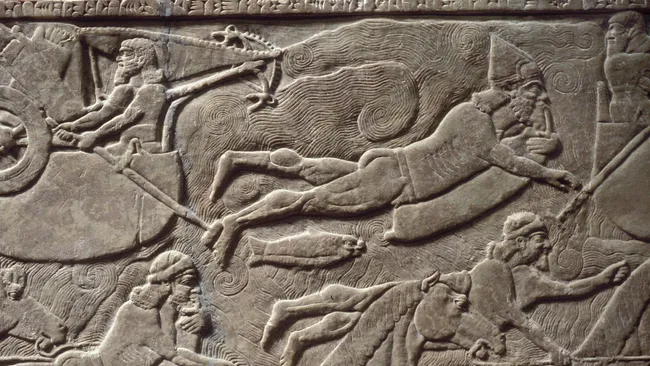
Assyrian swimmers: 2,900-year-old carving of soldiers using inflatable goat skins to cross a river
A carved panel from ancient Nimrud (865–860 B.C.) shows Assyrian soldiers crossing a river using goat-skin floats. Once thought to depict early scuba diving, the relief actually illustrates military tactics—soldiers swimming, rowing, and guiding horses while keeping gear dry. Found in Ashurnasirpal II’s palace, it reflects Assyrian innovation and military strength. These flotation devices, made from animal skins, helped the empire expand and endure for centuries. The panel is now housed in the British Museum.

Source: interestingengineering
Universe is built on three dimensions of time, new research suggests
Physicist Dr. Gunther Kletetschka proposes a bold theory: that time—not space—is the universe's true foundation, and it exists in three dimensions. In his six-dimensional model (3 time, 3 space), space emerges from time's structure. His framework reproduces known particle masses, offering testable predictions unlike past abstract theories. By maintaining causal order across all time dimensions, it avoids contradictions and may offer a new path toward unifying quantum mechanics and gravity.
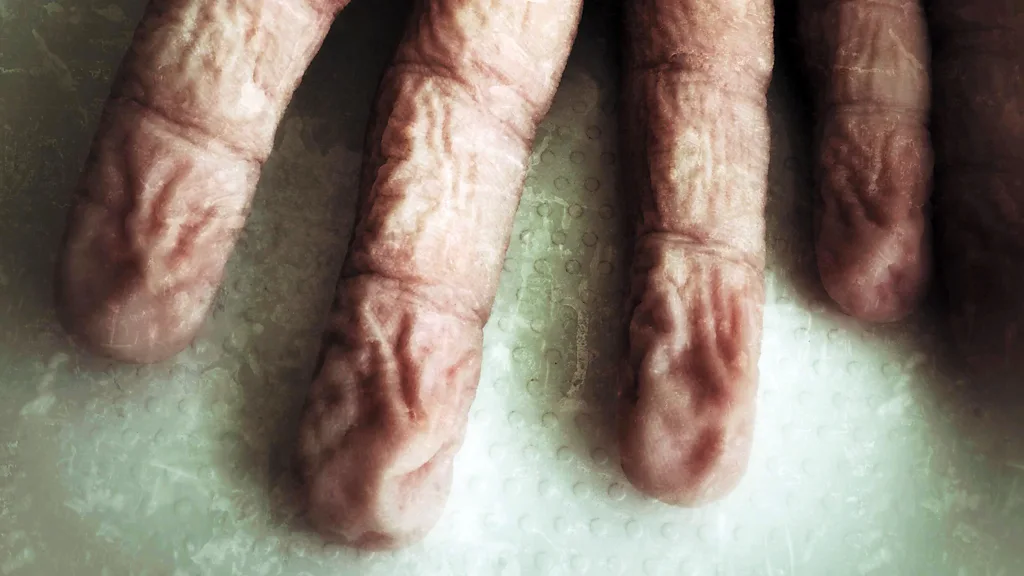
Why your fingers wrinkle in water (and what it can reveal about your health)
Fingertip wrinkling in water is caused by nerve signals that constrict blood vessels, not just skin swelling. This adaptation likely evolved to improve grip on wet surfaces, similar to tire treads. Research shows wrinkled fingers help us handle wet objects more easily and use less force. The pattern and speed of wrinkling can also indicate health issues like diabetes, nerve damage, or cardiovascular problems, making it a useful tool for diagnosing certain conditions.

Source: interestingengineering
Gas workers unearth 1,000-year-old mummy of boy sitting in unique pose in Peru
In Lima, Peru, gas workers uncovered a 1,000-year-old boy mummy from the Chancay culture, wrapped and seated with artifacts nearby. Found just 0.5 meters below the street, the mummy still had dark brown hair. Lima’s arid climate naturally preserved such remains, common along the coast. With over 400 archaeological sites, urban digs often reveal ancient tombs. Peru mandates archaeologists during excavations to protect this rich heritage, where past civilizations quietly lie beneath the modern city.
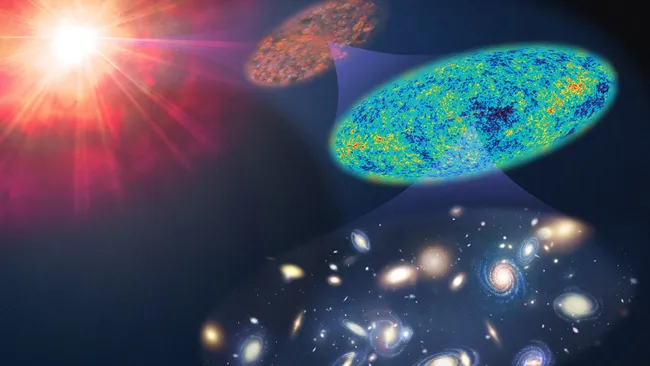
Did light exist at the beginning of the universe?
At the universe’s start, light existed but couldn’t travel freely because the hot, dense early cosmos was filled with free electrons scattering photons. About 380,000 years after the Big Bang, the universe cooled enough for electrons to bind with nuclei, letting light escape—this is the cosmic microwave background we detect today. Stars formed around 100 million years later, ending the cosmic dark ages and beginning the era of galaxies and starlight about a billion years post-Big Bang.