
undefined 2, 2025

Nothing Phone 3 and Headphone 1 look nothing like you've seen before
UK-based Nothing launched its Phone (3) flagship smartphone (\$799) and Headphone (1) (\$299) headphones, both with unique designs that break market norms. The Phone (3) features a distinctive grid-style triple camera, Glyph Matrix LED display, Snapdragon 8s Gen 4 chip, and a silicon-carbon battery. The Headphone (1), co-designed with KEF, offers noise cancellation, adaptive AI, and multipoint Bluetooth, competing strongly on price and features with major brands. Preorders start July 4; sales begin July 15.

Source: interestingengineering
World’s largest atom smasher collides protons and oxygen for the first time in history
The Large Hadron Collider (LHC) at CERN achieved its first-ever proton–oxygen collisions, starting a series of historic ion experiments that include oxygen–oxygen and neon–neon collisions. Running from June 29 to July 9, these experiments aim to explore cosmic rays, the strong nuclear force, and quark–gluon plasma. The complex setup required precise beam adjustments due to differing proton and oxygen ion properties. The LHCf experiment and crystal collimation tests are also part of this groundbreaking campaign.
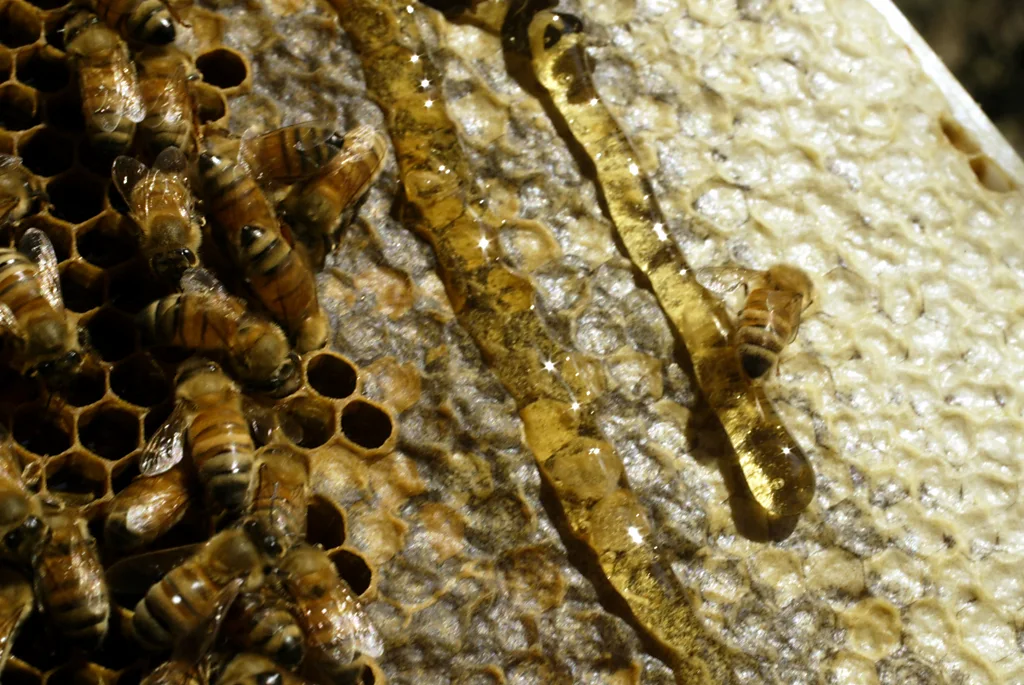
The chemical secrets that help keep honey fresh for so long
Honey resists spoilage thanks to its unique chemistry and production process. Bees reduce nectar’s water content from about 70-80% to 15-18% by fanning it, creating a sugar-rich, low-water environment where bacteria and fungi can’t thrive. Its acidity and sealed storage further inhibit microbial growth. Unlike most foods, honey’s low water activity preserves it indefinitely when sealed, though exposure to air or moisture after opening can lead to spoilage or fermentation, like in mead.

Source: interestingengineering
Diver discovers 18th-century shipwreck just 3 feet below Game of Thrones filming site
An underwater worker discovered an 18th-century shipwreck off Dubrovnik, Croatia, famed as a Game of Thrones filming location. Found less than three feet under the seabed near Old Town, radiocarbon analysis confirmed its late 18th-century origin. Experts know little about the ship’s type, size, or cargo, sparking intrigue. Croatia’s Ministry of Culture is investigating further to preserve the find. This follows a recent 16th-century shipwreck discovery off Saint Tropez.

The blood-curdling Permian monsters that ruled the Earth before dinosaurs
Long before T. rex, Earth was ruled by strange super-carnivores called synapsids during the Permian period (299–251 million years ago). These predators, like Dimetrodon and saber-toothed gorgonopsians, had unique adaptations for hunting in harsh climates. They thrived until the Permian-Triassic extinction wiped out 90% of species. Despite their extinction, synapsids are the ancestors of all mammals, including humans, shaping the path for life after the dinosaurs.

Wimbledon breaks with tradition, replacing sharply dressed line judges with AI to call shots
Wimbledon replaced traditional line judges with AI-powered robots for the first time, ending a 147-year tradition. The tech uses cameras and AI to track the ball and make calls, but some players like Yuan Yue found the line call volume too low. Former judge Pauline Eyre said the AI voice sounds uncertain. Human umpires still have the final say. Wimbledon aims to use different voices per court to avoid confusion. Hawk-Eye tech is also used in other sports and tennis tournaments, though Roland Garros keeps human judges.

Web giant Cloudflare to block AI bots from scraping content by default
Cloudflare will now block AI crawlers from accessing websites by default unless owners permit or charge for access, impacting AI developers’ data scraping. Starting Tuesday, new domains can deny AI bots or use a “pay per crawl” model. AI crawlers gather data to train models but reduce traffic and revenue for content creators. OpenAI declined to join Cloudflare’s plan, citing concerns over added middlemen. Experts say this may limit AI training data, affecting chatbot development and model viability long term.

Microsoft's 'Blue Screen of Death' dies after 40 years of memes, jokes, t-shirts
Microsoft is retiring its iconic "blue screen of death" after 40 years, replacing it with a black screen of death on Windows 11 version 24H2 devices starting this summer. The new screen shows error codes more clearly to speed up troubleshooting and aims to cut recovery time to 2 seconds. This change is part of Microsoft’s Windows Resiliency Initiative launched after the 2024 CrowdStrike outage. The blue screen had become a pop-culture symbol, featured in memes, merchandise, and even workplace stories.

He pioneered the cellphone, changing how people connect, and disconnect, globally
Marty Cooper, who led Motorola’s R\&D in the 1970s, invented the mobile phone, starting with the bulky DynaTAC 8000X. Now, billions of smartphones connect nearly 60% of the world, shaping how we communicate—calls for intimacy, texts for routine. Cooper predicts phones will soon monitor health to prevent disease. While concerns grow about screen time and kids, Cooper urges using phones in education. Globally, phones bridge distances, especially where connectivity is limited. For Cooper, this revolution is only just beginning.
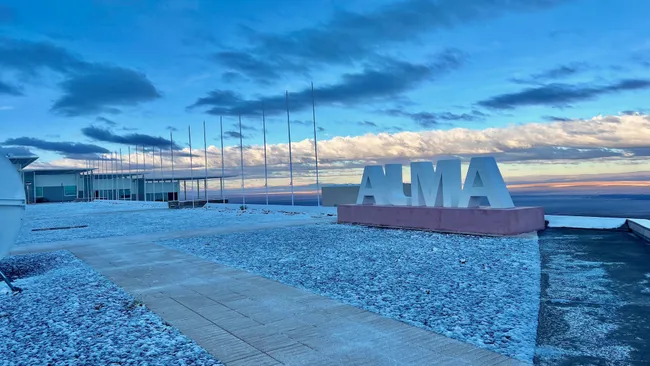
Rare snowfall in Atacama Desert forces the world's most powerful radio telescope into 'survival mode'
A rare snowfall hit the Atacama Desert’s ALMA radio telescope base camp, halting operations. The desert, one of the driest places on Earth, rarely sees snow, especially at ALMA’s 9,500 ft altitude. The storm brought heavy rain, strong winds, and cold temperatures, forcing ALMA to activate safety protocols. While the telescope is built for extremes, this unusual weather raises concerns about future climate impacts. Scientists say climate change may increase precipitation in this hyper-arid region, but it’s too soon to be sure.
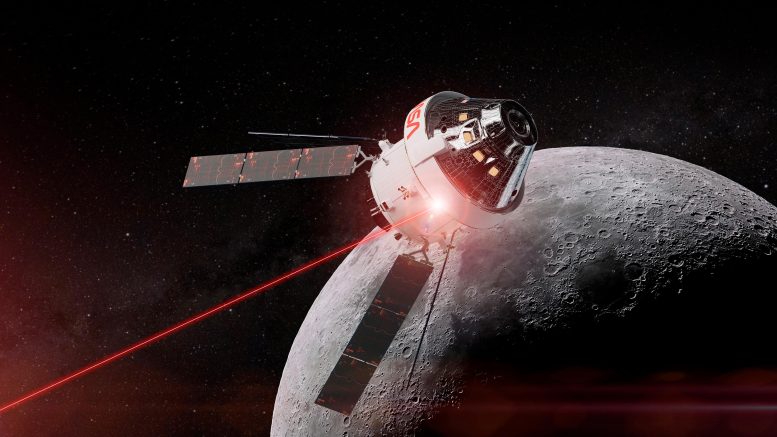
4K from the moon: Artemis II to trial high-speed laser communications
NASA and Australia’s ANU are collaborating to test budget-friendly laser communications for the Artemis II lunar mission. Using a low-cost Real Time Optical Receiver (RealTOR) built from off-the-shelf parts, the tech aims to beam 4K video and data from the Moon to Earth much faster than radio. ANU’s Mount Stromlo Observatory will try receiving the signal during Orion’s flight around the Moon in early 2026. Success could transform deep-space communication for future Moon and Mars missions.