
undefined 29, 2025
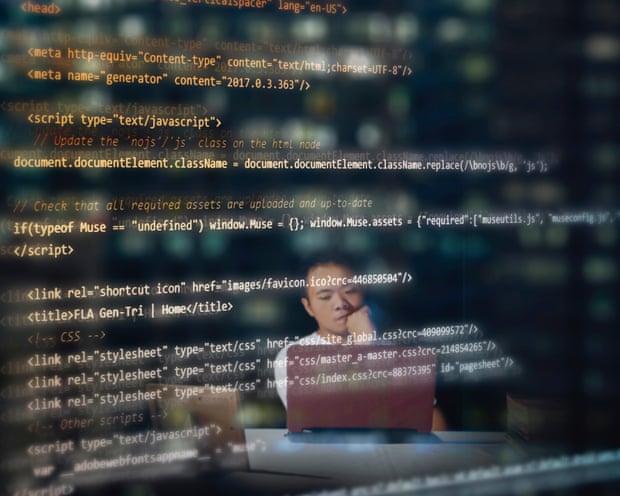
Competition shows humans are still better than AI at coding – just
Przemysław Dębiak, aka Psyho, narrowly beat OpenAI’s AI in the 2025 AtCoder World Finals but believes he may be the last human champion as AI advances rapidly. A former OpenAI employee, he sees irony in helping develop tech that could surpass him. While humans still reason better, AI’s speed and scalability give it a growing edge. He warns that fast-moving AI progress could disrupt white-collar jobs and society’s stability.

Google admits earthquake alert system failed to warn most users before 2023 Turkey quake
Google's Android Earthquake Alerts system failed to warn most people before the deadly 2023 Turkey quake, sending just 469 high-level alerts despite potential to reach 10 million. The system underestimated the quake’s severity, issuing mostly low-priority alerts. Google later admitted flaws in its detection algorithm and updated it after the disaster. Experts criticized the delay in transparency and warned against over-reliance on tech not integrated with national systems.

Source: interestingengineering
Google AI makes breakthrough to crack Roman texts to unearth secrets of the past
Researchers have developed an AI model, Aeneas, to help reconstruct fragmented ancient Roman inscriptions. Trained on over 176,000 Latin texts, the neural network predicts missing text, origin, and date by analyzing linguistic and historical patterns. It accurately analyzed complex inscriptions like Augustus’s *Res Gestae* and was found helpful by historians in 90% of cases. Experts emphasize its value as a tool to complement, not replace, human interpretation.

What is Tea Dating Advice? Controversial app lets women review men
Tea Dating Advice, an app helping women vet men through reviews and background checks, suffered a major data breach exposing about 72,000 images from posts, DMs, and user profiles. The breach, affecting users who joined before Feb 2024, followed a surge in popularity. While no emails or phone numbers were leaked, concerns about privacy and app ethics resurfaced. Tea has since patched the issue, contacted law enforcement, and implemented new security measures.

Intel expects work force to shrink by 25,000
Intel plans to cut over 25,000 jobs by the end of 2025, reducing its workforce from nearly 109,000 to 75,000 as part of a major restructuring. The company is halting factory projects in Germany and Poland, slowing construction in Ohio, and consolidating operations in Asia. Intel posted a \$2.9B Q2 loss amid weak demand and restructuring costs. New CEO Lip-Bu Tan aims to boost efficiency and compete in AI and chipmaking after years of missteps and underperformance.
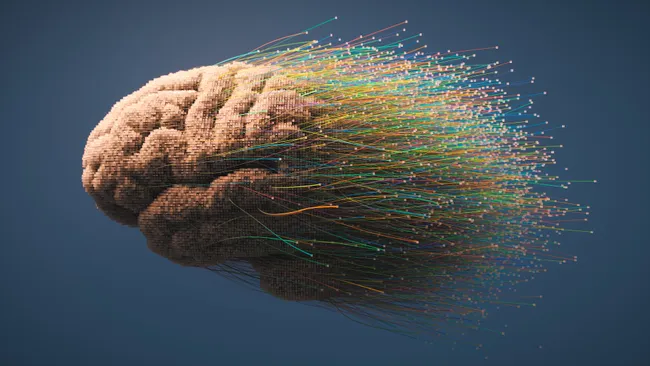
Memories aren't static in the brain, they 'drift' over time
A new study shows that memories of places "drift" across different neurons in the brain over time, challenging the long-held belief that fixed "place cells" encode stable spatial memories. Using virtual reality and tightly controlled conditions, researchers found that only 5–10% of hippocampal cells consistently fired, while less-excitable ones shifted. This drift may help the brain distinguish similar experiences and track time. The findings could offer insight into memory decline with aging.

Microsoft Edge transforms into an AI browser with new Copilot Mode
Microsoft is testing a new experimental Copilot Mode in its Edge browser, letting the AI assistant search across open tabs, summarize info, compare products, and even help book restaurants. It supports voice commands and may access browsing history and credentials (with permission). Copilot appears in the address bar and new tab page. The feature is optional, free for now, and may become part of a subscription later.
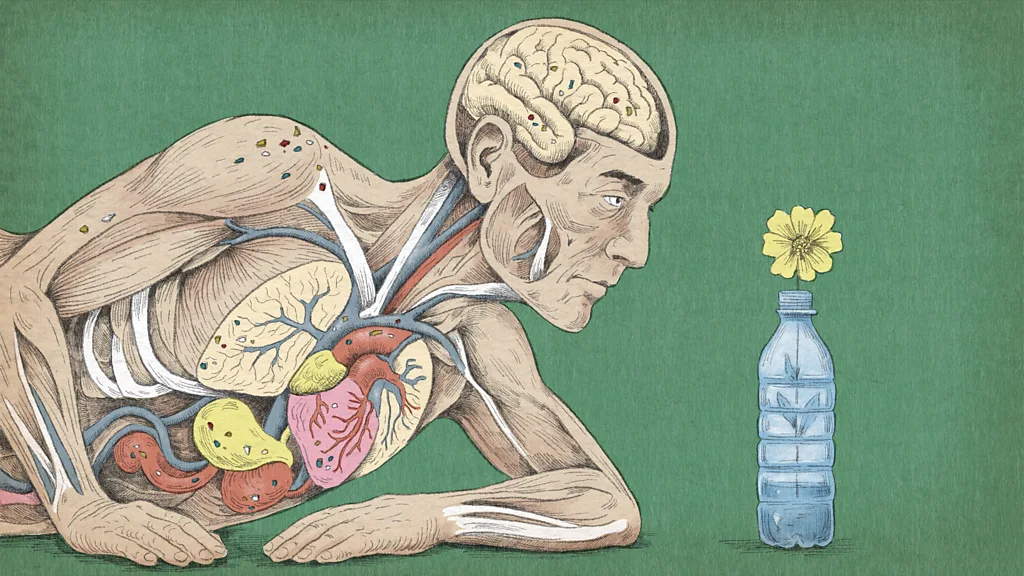
How do the microplastics in our bodies affect our health?
Microplastics, now found in human blood, bones, brains, and organs, are raising major health concerns. Studies link them to inflammation, cardiovascular disease, cognitive decline, and possibly cancer, though direct causation remains unproven. A 2025 human trial tracked plastic absorption from food and drink, while other research found microplastics in arteries and dementia-affected brains. Scientists warn these particles may disrupt cells, carry toxins, or impair treatments, and urge safer plastic use and regulation.

Source: interestingengineering
28-inch Jurassic Tweety? Tiny dinosaur chirped like a bird 163 million years ago
Scientists have discovered *Pulaosaurus*, a 163-million-year-old dinosaur with preserved throat bones, suggesting it may have made birdlike sounds. Found in China, it’s only the second dinosaur known with vocal anatomy intact. Though unrelated to birds, *Pulaosaurus* had a bony, mobile larynx similar to that of the later *Pinacosaurus*, indicating birdlike vocalization may have evolved independently in multiple dinosaur lineages—pushing the origins of birdsong back millions of years.
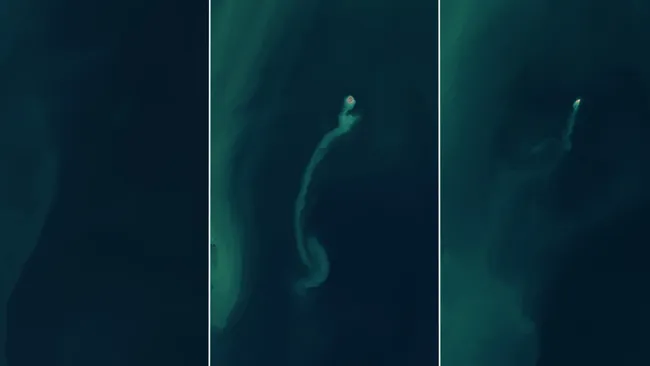
'Ghost island' appears after underwater eruption, then vanishes into the Caspian Sea
A short-lived “ghost island” appeared in the Caspian Sea in early 2023 after an underwater mud volcano, Kumani Bank, erupted off the coast of Azerbaijan. The island grew to about 1,300 feet wide by February but steadily eroded and had nearly vanished by late 2024, NASA satellite images show. Azerbaijan, home to over 300 mud volcanoes, lies above active tectonic zones, making such eruptions common. Though less explosive than lava volcanoes, mud volcanoes release flammable gas, occasionally sparking fiery blasts. Similar temporary islands have formed — and disappeared — elsewhere, including in Tonga and Japan.

Can’t Hit 10,000 Steps? Turns Out You Don’t Need To
A new study shows 7,000 steps a day can cut early death risk by 47% and protect against diseases like dementia and diabetes—offering benefits close to 10,000 steps. Even small increases from 2,000 steps improve health, with gains leveling off after 7,000. This more achievable goal encourages progress over perfection and may shape future activity guidelines.