
undefined 25, 2025
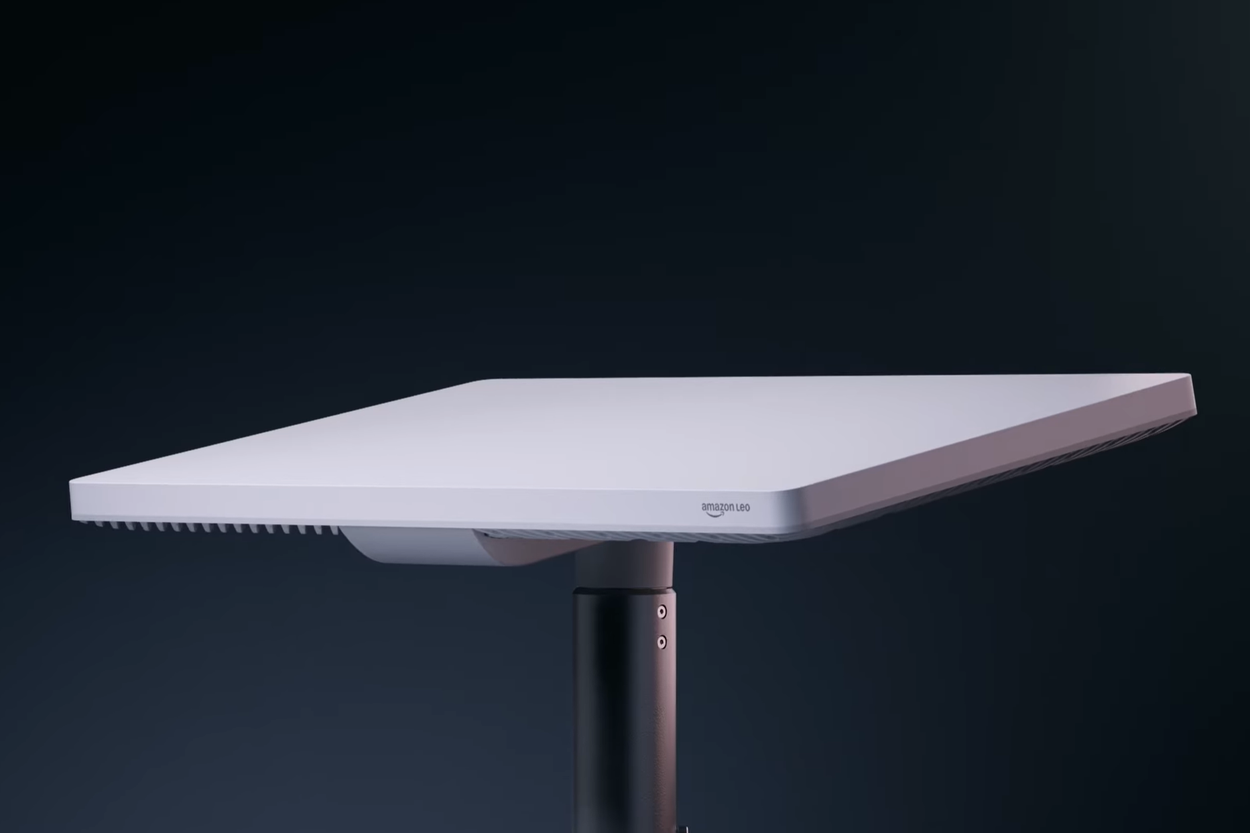
Amazon debuts Starlink competitor Leo
Amazon launched Amazon Leo, claiming the world’s fastest commercial satellite internet. Its 150 satellites power the Leo Ultra antenna with speeds up to 1Gbps, far faster than Starlink’s typical 200Mbps. Though smaller than Starlink’s 8,500-satellite network, Leo targets business users and will expand next year. Amazon plans 3,236 satellites vs. SpaceX’s 12,000. Early partners include Hunt Energy, Vanu Inc, and JetBlue, which will test the service.

The fate of Google’s ad tech monopoly is now in a judge’s hands
Judge Brinkema heard closing arguments in the U.S. case on how to remedy Google’s ad tech monopoly and will rule next year. The DOJ wants Google to spin off its ad exchange and share more data; Google offers narrower behavioral changes. Brinkema questioned whether a breakup would take too long in a fast-moving industry. A breakup could reshape Google’s multitrillion-dollar business and mark the first major tech divestiture of the internet era.

The large language mistake
Tech CEOs predict near-term superintelligent AI, but the article argues this is hype. Today’s systems are just large language models that statistically predict text and don’t replicate human thought, which neuroscience shows is largely independent of language. LLMs emulate communication, not reasoning. Critics say scaling won’t yield AGI; intelligence requires diverse cognitive abilities and world models. Even if AI matched human cognition, it might still recycle existing data rather than make paradigm-shifting breakthroughs.

Source: interestingengineering
US firm’s ‘space gun’ could launch satellites into orbit at 23 times the speed of sound
Longshot, a 2021 aerospace start-up, is developing a ground-based “space gun” to fire payloads into low Earth orbit at far lower cost than rockets. Using a WWII-inspired multi-injection system powered by compressed gas, it aims to accelerate projectiles to near-orbital speeds (up to Mach 23). The firm has run 100+ tests, reaching Mach 4, and is building a giant 30-inch, 120-ft accelerator in a former Navy cannon facility. Backed by investors and the U.S. Air Force, it seeks approval for a larger Nevada launch site.

X's new location feature exposes far-right European accounts based in Asia, Australia
Euronews Next found that some X accounts spreading Eurocentric extremist content are actually based in Asia or Australia. Using X’s new location labels, analysts reviewed 30+ accounts posting far-right hashtags on 24 Nov. Examples include “Make Europe Great Again” accounts located in South Asia and Vietnam, and “Make Europa Snow” in Australia, all posting racist, white-supremacist messages. X says locations may be inaccurate but promises improvements. The platform continues anti-bot measures, including small fees, bot sweeps, and labeling automated accounts.
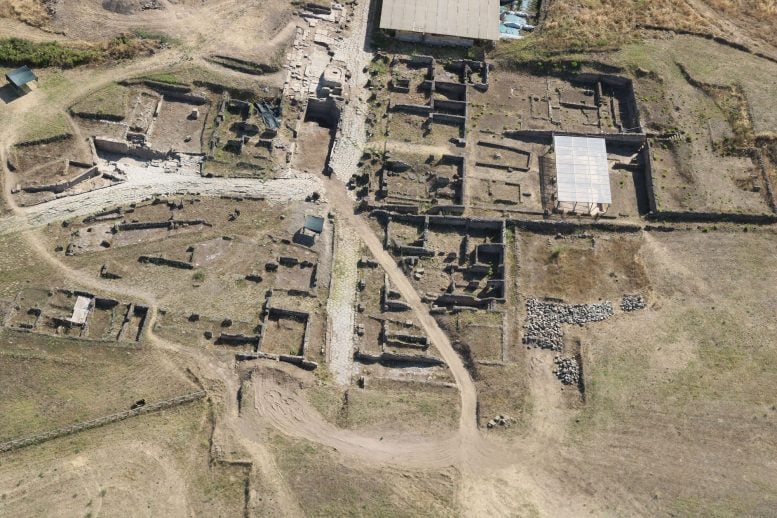
Archaeologists uncover massive 2,250-year-old monument beneath ancient Roman city
Archaeologists in Gabii, 11 miles east of Rome, uncovered a massive stone-lined basin dating to around 250 B.C., possibly older. Likely part of the city’s forum, it offers a rare view of early Roman urban planning, otherwise buried in Rome itself. The find, along with earlier stepped structures, shows strong Greek influence on Roman design. Gabii’s exceptional preservation, abandoned by 50 B.C., lets researchers study early civic spaces. Upcoming excavations will probe basin deposits and a nearby anomaly that may be a temple, shedding light on early Roman architecture and ritual life.

Indie game developers have a new sales pitch: being ‘AI free’
Indie developers are pushing back after Nexon’s CEO claimed all game studios now use generative AI. Many reject the tech on ethical and creative grounds, arguing it exploits artists’ work and undermines craftsmanship. Developers created a freely shared “No Gen AI” seal to signal that their games are entirely human-made; titles like Rosewater and Astral Ascent already use it. Studios like D-Cell and Trinket say AI adds little value and that creative constraints drive better work. As major publishers adopt AI, indies emphasize that players still value human-made games.

Music eases surgery and speeds recovery, Indian study finds
A Delhi study found that playing calming music to patients under general anaesthesia reduced the need for propofol and opioids during gallbladder surgery. In a trial of 56 patients, those who heard flute or piano music had steadier vital signs, lower stress-hormone levels, and woke up faster and clearer. Researchers say the brain’s auditory pathways stay partly active even when unconscious, allowing music to ease the body’s stress response and modestly improve recovery.

Source: interestingengineering
Voyager 1: World’s farthest spacecraft nears historic one-light-day from Earth
Voyager 1 will reach a major milestone in late 2026: one light-day from Earth, the distance at which radio signals take 24 hours to arrive. Now about 15.7 billion miles away, it should hit 16.1 billion miles around November 15, 2026. At that point, each command will need a full day to reach the probe and another day to return. Launched in 1977, Voyagers 1 and 2 remain NASA’s longest-running missions, with Voyager 1 still operating on its fading nuclear power as humanity’s most distant spacecraft.

Your brain changes at 9, 32, 66, and 83
Cambridge neuroscientists identified five major phases of brain structure across the human lifespan using MRI scans of 3,802 people. Key turning points occur at ages 9 (childhood), 32 (adulthood), 66 (early aging), and 83 (late aging). Childhood features synapse pruning; adulthood shows peak cognitive wiring; early aging sees gradual connectivity decline; late aging shifts from global to local networks. Mapping these phases helps explain vulnerabilities in learning, mental health, and cognition at different life stages.