
undefined 23, 2025

Science in 2026: the events to watch for in the coming year
A 2026 science outlook highlights rapid growth of AI in research, including autonomous AI agents and smaller, task-specific models. Gene-editing trials for rare childhood diseases may expand, alongside major clinical trials and regulatory reforms. Space missions will surge, with crewed lunar flybys, Moon probes, Mars-moon sampling, exoplanet searches and solar observation. China also plans an ambitious ocean-mantle drilling expedition.

OpenAI’s ChatGPT ‘wrapped’ is a good reminder to check your privacy settings
OpenAI has launched “Your Year with ChatGPT,” a Spotify Wrapped-style recap for users in several English-speaking countries. The feature shows poems, stats, awards and AI-generated portraits summarising how people used the chatbot. While playful, it also highlights privacy trade-offs, as it requires memory and chat history to be enabled and reminds users to review data and training settings.

Activist group says it has scraped 86m music files from Spotify
An activist group, Anna’s Archive, claims to have scraped tens of millions of music files and metadata from Spotify, raising fears the material could be used to train AI models. Spotify says it blocked the accounts involved and that not all content was taken. The incident has intensified debates over copyright, piracy and AI training, as governments face pressure to clarify rules protecting artists’ work.

When something goes wrong with your flight, these people take charge
American Airlines relies on a 24/7 operations center where hundreds of specialists coordinate flights, crews, aircraft and passengers across its global network. Using real-time data and teamwork, they manage disruptions such as medical emergencies, weather and technical issues to avoid cancellations. This behind-the-scenes work is critical to keeping flights on schedule, reducing costs and ensuring passengers reach their destinations.
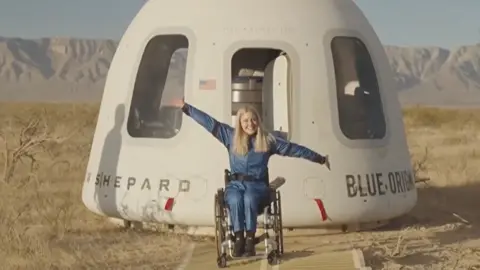
Engineer becomes first wheelchair user to go to space
A German engineer, Michaela Benthaus, has become the first wheelchair user to travel to space after flying on a Blue Origin suborbital mission. Paralyzed in a past accident, she worked with a retired space engineer to make the 10-minute flight possible. The mission highlights growing accessibility in space tourism and rising competition among private space companies.

Source: interestingengineering
World’s largest nuclear plant set to restart in Japan nearly 15 years post-Fukushima
Japan has approved restarting the Kashiwazaki-Kariwa nuclear power plant, the world’s largest, nearly 15 years after Fukushima. The decision supports energy security and lower fuel imports as demand rises, with plans to expand nuclear power’s share of electricity. Strong local opposition persists, reflecting ongoing safety concerns and public mistrust of operator TEPCO.

What one fructose drink does to the immune system
New research shows that consuming fructose can heighten harmful immune responses to bacterial toxins. In studies of healthy adults, fructose (but not glucose) increased toxin-detecting receptors on monocytes, leading to stronger inflammatory reactions. The findings suggest even short-term high fructose intake may promote inflammation and could affect infection risk, especially in people with metabolic conditions.

Sony’s first EV collab with Honda comes with PS remote play in tow
Sony Honda Mobility’s Afeela 1 EV hatchback will feature built-in PS Remote Play for PlayStation 4 and 5, combining Sony’s electronics with Honda’s manufacturing. Launching next year at $102,000, it offers 480 hp, a 300-mile range, lidar-assisted driving, multiple screens, an AI assistant, and Tesla Supercharger compatibility. A lower-cost $89,000 model will arrive in 2027, initially available only in California.

High-achieving adults rarely began as child prodigies
A review of 19 studies on nearly 35,000 high achievers finds that childhood prodigy status or intensive early training rarely predicts adult world-class performance. Most top performers developed their skills gradually while engaging in diverse activities, which may foster flexible learning and prevent burnout. Only about 10% of top youth performers excelled as adults, suggesting broad early experiences are more effective for long-term elite achievement than early specialization.

A quantum trick helps trim bloated AI models
Tensor networks, originally developed in physics to manage complex particle interactions, are being applied to AI to compress models, reduce energy use, and improve efficiency. By representing correlations in data more effectively than standard neural networks, they can shrink models like Llama 2 and GPT-2 by 70–90% with minimal accuracy loss, allowing deployment on personal devices. Tensor networks also promise faster training, greater interpretability, and potential new AI architectures that bypass neural networks entirely.