
undefined 4, 2025

‘Eyes-off driving’ is coming, and we’re so not ready
Level 3 “eyes-off” driving is arriving fast, with GM, Ford, Honda, and others racing to market despite unclear laws and liability. GM plans to launch by 2028, starting with the Cadillac Escalade IQ. The tech lets drivers look away but still requires them to take control when prompted, raising thorny legal questions when crashes occur. While Mercedes accepts limited liability, most automakers don’t. As courts struggle to assign blame, experts warn this “chaotic middle” of shared control will test both drivers and regulators.

OpenAI and Amazon sign $38 billion deal for AI computing power
OpenAI signed a $38 billion deal with Amazon to run its AI systems on Amazon Web Services using hundreds of thousands of Nvidia chips. The move follows OpenAI’s revised partnership with Microsoft and approval to shift to a for-profit structure. Amazon shares rose 4% after the announcement. OpenAI, facing surging demand for computing power, plans to deploy all capacity by 2026. Despite concerns over its heavy spending, CEO Sam Altman insists revenue growth justifies the investment.

Before and after images of Jamaica show destruction left by Hurricane Melissa
Satellite images reveal massive destruction in Jamaica after Hurricane Melissa made landfall near Black River with 185 mph winds. Homes, businesses, and landmarks like St John’s Anglican Church were destroyed; farmlands in the island’s west are flooded and crops ruined. Montego Bay’s port and oil tanks were inundated, and about 400,000 people are affected. Damage is estimated at £5.8 billion, over a third of Jamaica’s GDP, with recovery expected to take months and require global aid.

The man who invented AGI
In 1956, “artificial intelligence” was coined at Dartmouth. Decades later, “artificial general intelligence” (AGI) emerged to describe machines matching or surpassing human intellect. The overlooked originator was physicist Mark Gubrud, who used and defined the term in a 1997 paper on nanotech and military risks. In the 2000s, Ben Goertzel, Shane Legg, and others popularized AGI, unaware of Gubrud’s work. Though he never gained fame or fortune, Gubrud’s definition endures, and so do his warnings about AI’s dangers.

Elon Musk’s $1tn Tesla pay deal to be rejected by huge Norway wealth fund
Norway’s $1.7 trillion sovereign wealth fund will vote against Tesla’s proposed $1 trillion pay package for Elon Musk, citing its “excessive size” and risks tied to Musk’s dominance. The fund, Tesla’s seventh-largest shareholder, had also opposed his earlier $56 billion deal. The new plan could boost Musk’s stake to 25% and his fortune above $2 trillion if Tesla’s value rises to $8.5 trillion. Major investors and proxy firms Glass Lewis and ISS also urge rejection as Tesla faces falling sales in key markets.
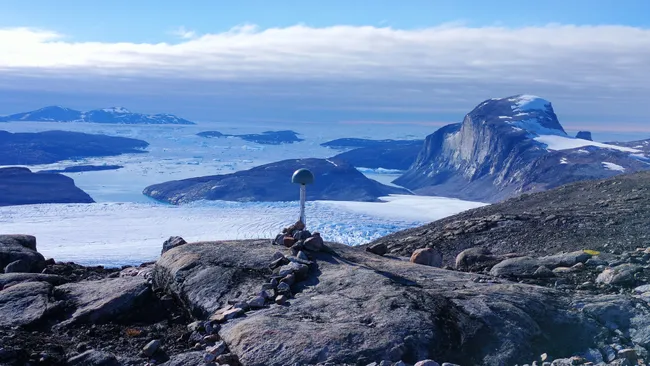
Greenland is twisting, tensing and shrinking due to the 'ghosts' of melted ice sheets
A new study shows Greenland is still reshaping from ancient ice ages. Using satellite data, researchers found the island twisting, sinking, and rising as its mantle slowly rebounds from the weight of long-gone ice sheets. Greenland’s crust is being pulled toward Canada as a “forebulge” from the vanished Laurentide Ice Sheet flattens, while ongoing melt of its own ice sheet pushes the land upward. The findings reveal faster, more complex deformation than expected, crucial for mapping and understanding climate impacts.

Brightest ever flare from supermassive black hole spotted by scientists in California
Scientists have observed the brightest-ever flare from a supermassive black hole, shining with the energy of 10 trillion suns and located 10 billion light-years away, the most distant of its kind. The flare likely occurred when a star was torn apart after straying too close. Detected in 2018 at Caltech’s Palomar Observatory, it peaked over three months and has since faded. Published in Nature Astronomy, the discovery helps scientists study how supermassive black holes interact with their surroundings early in the universe.
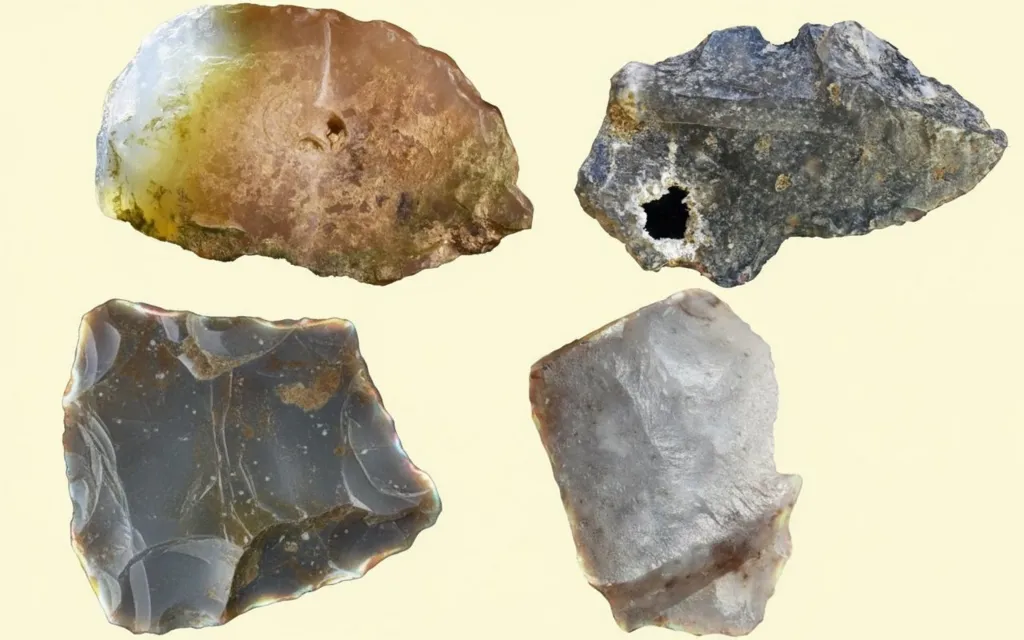
Stone tool discovery suggests very first humans were inventors
A new discovery in northwest Kenya shows early humans were skilled toolmakers 2.75 million years ago, using stone tools continuously for 300,000 years at Namorotukunan. The 1,300 Oldowan tools, carefully crafted from river rocks, reveal sophisticated knowledge of materials and survival strategies. Tool use allowed these early humans to thrive through drastic climate changes without needing biological adaptation, challenging previous ideas that continuous technology emerged only with larger brains much later in human evolution.

Stability AI largely wins court battle against Getty Images over copyright
In a UK court ruling, Stability AI largely won its lawsuit battle with Getty Images over its AI image generator, Stable Diffusion. Getty succeeded only on a limited trademark claim but lost its copyright infringement and secondary copyright claims. Stability argued its AI doesn’t store or reproduce copyrighted works, and the court agreed. The case highlights ongoing clashes between AI companies and creative industries, with similar lawsuits involving Anthropic, Meta, and Midjourney over the use of copyrighted material for AI training.

Source: interestingengineering
World’s first hydrogen-fueled hypersonic jet could fly at 12 times the speed of sound
Australia’s Hypersonix Launch Systems raised $46 million in Series A funding from NRFC, QIC, and international defense investors to develop the world’s first reusable, hydrogen-fueled hypersonic aircraft, capable of Mach 12 speeds. The Brisbane-based company’s SPARTAN scramjet engine is fully 3D-printed and emits zero carbon. Funds will support Pentagon- and NASA-backed DART AE test flights, advanced manufacturing in Queensland, and a second ISR-focused aircraft, VISR, advancing Australia’s hypersonic and defense capabilities.